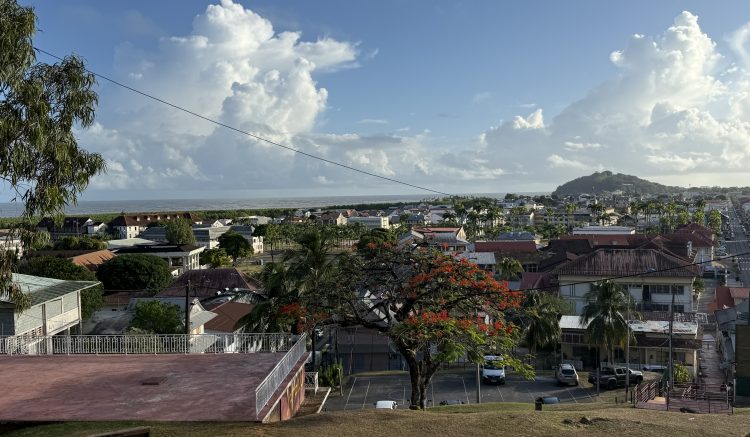
Back when I lived in Paris, I knew a few people who would travel to French Guiana for holiday. There are direct flights and it’s a tropical area with beaches and jungle, so a good destination. However, since we were coming from Suriname our travel to French Guiana was via a small wooden boat and a mini bus. The border crossing was relatively easy and relaxed. And the same east-west road stretches across all three Guyanas. Cayenne, the capital, was quite a dirty city with many homeless people. My favourite spot was up on a hill near the Fort Cépérou Lighthouse. From there, the view was pretty and you could see the town and the ocean.
In addition to Cayenne, the other nearby city is Kourou, where the European Space Agency launches its rockets carrying satellites. We visited the mission control centre and had a short tour. Unfortunately, since a launch was coming up soon, we could not visit the launchpad. However, we could see them dotted around the landscape, especially from the boat heading towards the Salvation Islands.
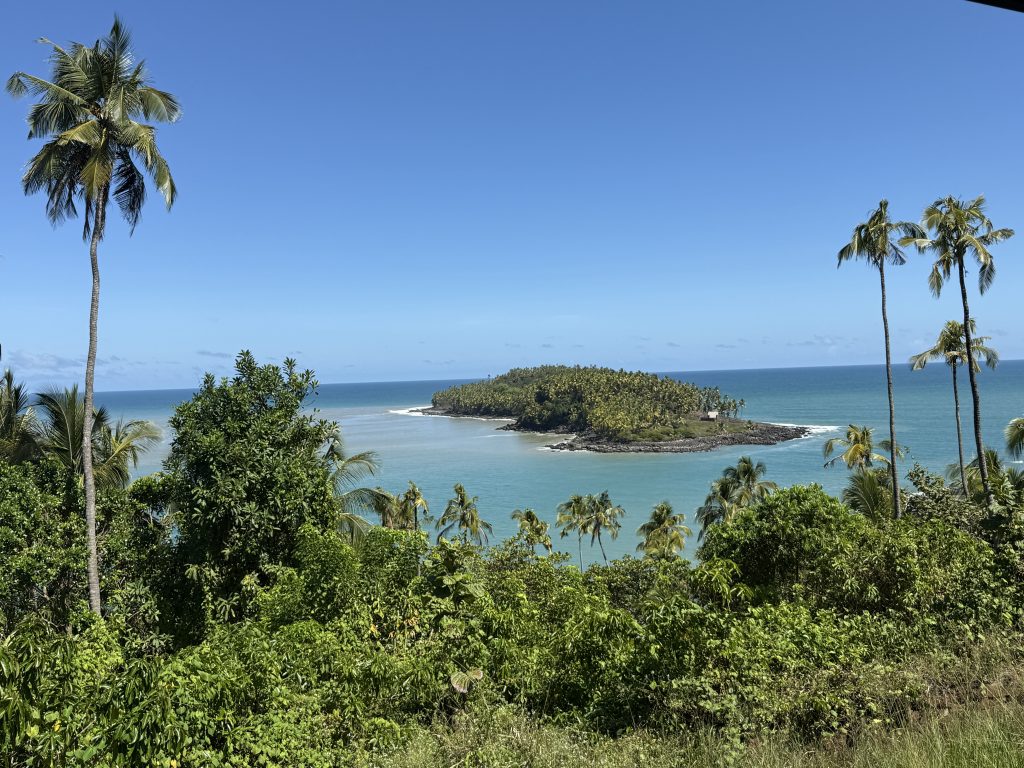
The Salvation Islands are famous for being a penal colony and supposed location of Papillon, from the famous French book. His prison location was meant to be on Devil’s Island, but historians dispute whether he was really there. We took a catamaran around the three islands and landed on two. Devil’s island is not accessible anymore. Most of the water near French Guiana was brown, but between the islands there was some sparkling blue water. There are ruins of prisons and other buildings, a lighthouse and cemetery. In the trees we saw many monkeys, agouti on the ground, and in the sea, we spotted sea turtles. Very beautiful and wild places that I never thought I would be able to visit.
Highlights
- European Space Agency in Kourou, site of most launches for Europe
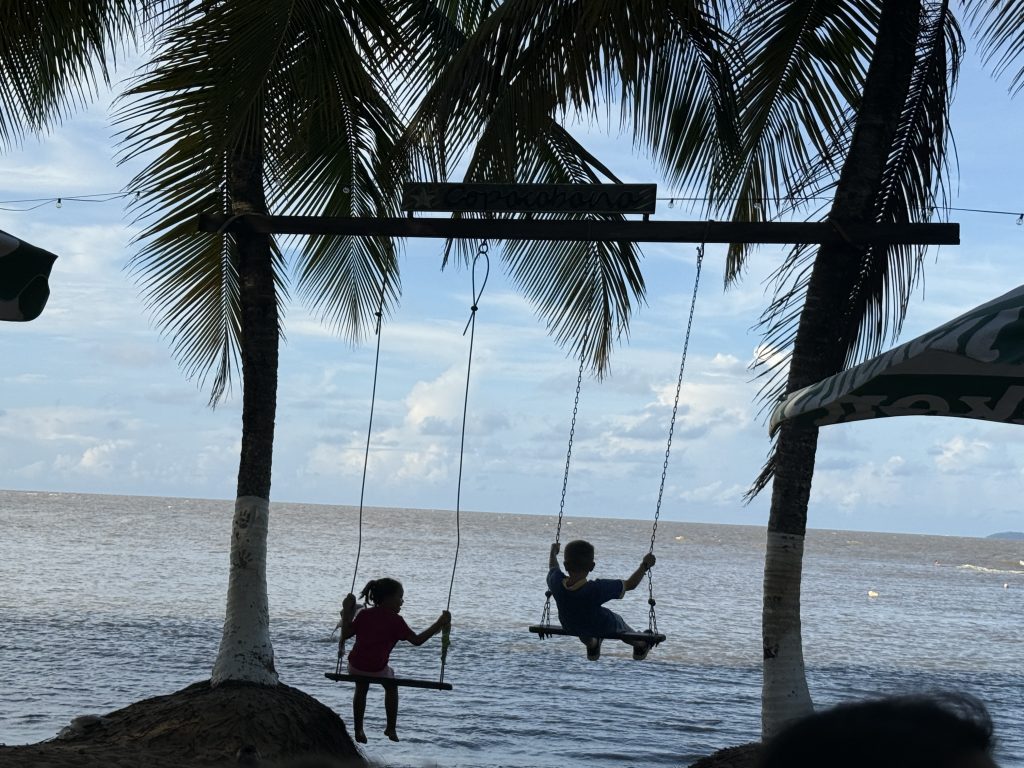
- Kourou beach and boardwalk
- Cayenne the capital city, especially the view from Fort Cépérou Lighthouse
- Salvation Islands (Îles du Salut) including Devil’s island, where Papillon was supposedly imprisoned
- Parc Naturel Régional de la Guyane
- Parc Amazonien de Guyane just north of Brazil
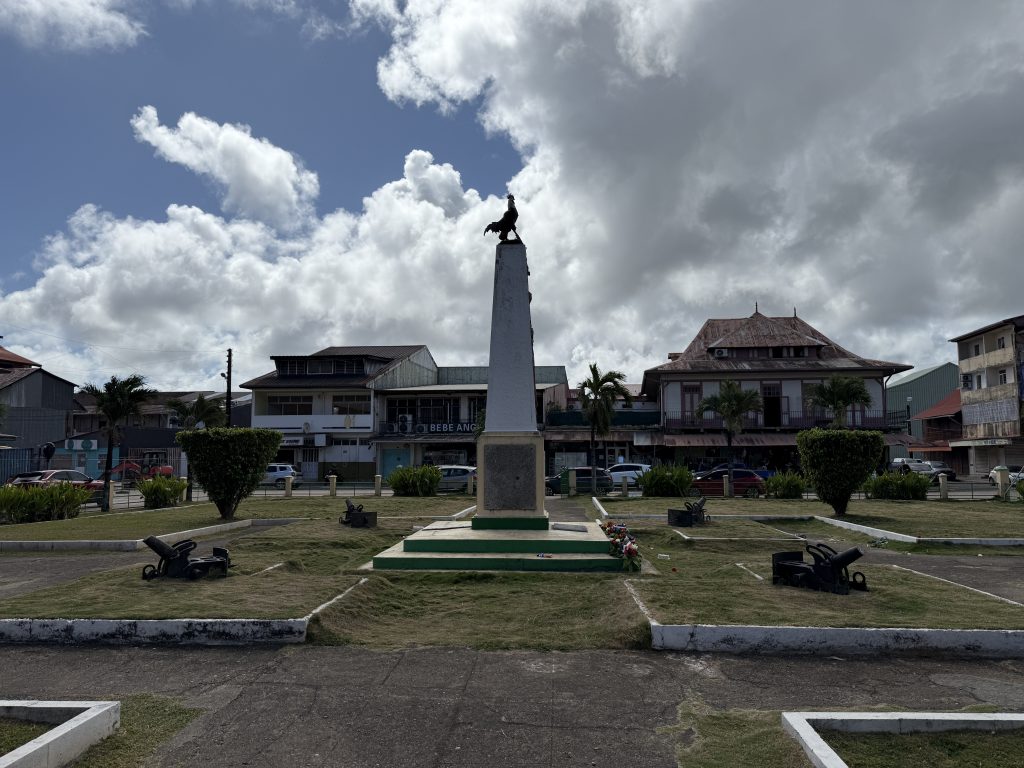
- At our rest stop in Iracoubo, we saw the Hommage à Pi’pi Ahieramo, pi’pi Molko and Church Of Saint Joseph D’Iracoubo
Before you go
- French Guiana is not officially a separate country, it is an overseas territory of France
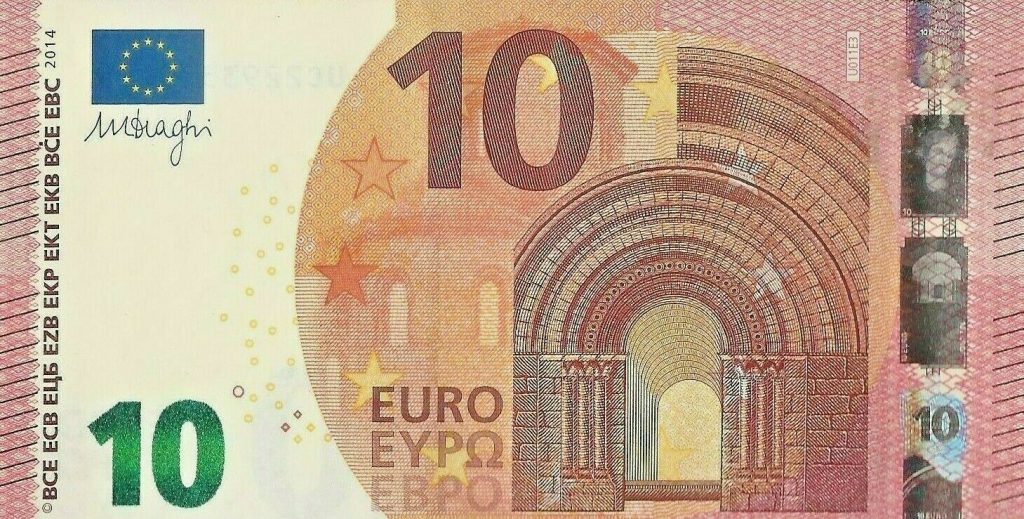
- Euros are the official currency
- French is the official language and there are many local languages including creole
- Salvation islands were used as a penal colony from 1854 to 1938; associated with the famous prisoner Papillon
- Has borders with Brazil and Suriname
- Hot, humid weather with rainy season from December to June
- Malaria is endemic especially near the forests in the south


Transport
- Aéroport International de Cayenne – Félix Éboué is the main airport and has limited international flights. Located about 30 minutes drive south of Cayenne
- The small boat from Suriname arrives at Saint Laurent du Maroni
- Taxis are available and we had help from a restaurant to book them
- However, we mostly had a mini bus or taxi vans via our tour to take us around for further distances
Accommodation
- In Cayenne, we stayed at the ibis Styles Cayenne Centre Amazonia in the centre of the city. It was okay for a night
- In Kourou, we stayed at Hôtel Atlantis Kourou, which was well-located near the Space Centre and main town
- As usual I recommend checking reviews on Google Reviews or using AirBnB
Currency
The official currency in Italy is the Euro. As of April 2026, one British pound is equal to 1.15 Euros.
I recommend to check the currency conversion just before you leave as this fluctuates


Food
The food in French Guiana was a mix between local and French food. We also found Chinese and Thai restaurants in Cayenne, and a Peruvian restaurant in Kourou. Luckily, we also enjoyed nice pastries and bread from the French-style bakeries.
I’ll write more about the specific restaurants in the city posts.
FAQs
Q: Do I need a tour guide?
A: Yes, probably at least for transport between places as that was not easy. We did a self-guided tour around Cayenne. And in Kourou, we had a guide at the European Space Agency, but walked around the coast on our own.
Q: Do people speak English?
A: Some people do, but it is useful to know French or have a translation app such as GoogleTranslate.
Q: Can I travel solo?
A: Yes, but with a tour group.
Q: How easy is it to send postcards?
A: I found postcards and stamps pretty easily, but they were expensive. At the post office, I had to buy a pack of stamps, as they did not sell them individually. See Sending Postcards from Abroad for details on cost and the time it took to reach the USA.
Go to Country Map