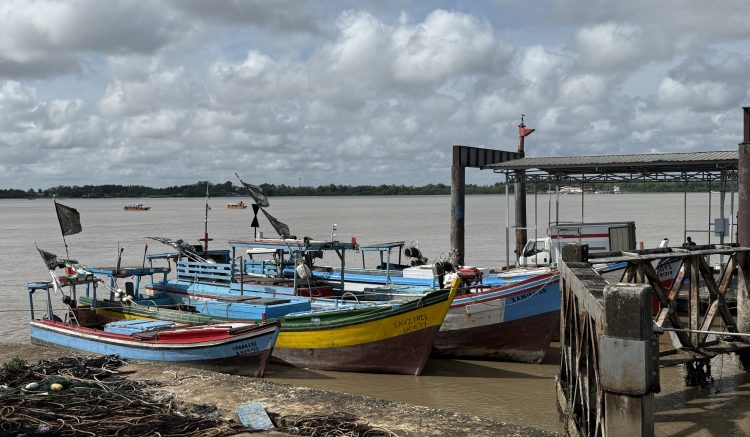
Travel to Suriname by flight to Paramaribo is probably the easiest route if you can find a flight, but I went overland from Guyana. We had a 14-hour day of travel on mini-buses and a very hot ferry. Then, when we arrived in South Drain, it started pouring and it was hard to stay dry while waiting to get through immigration. Definitely have your paperwork in order and pay for the visa in advance!
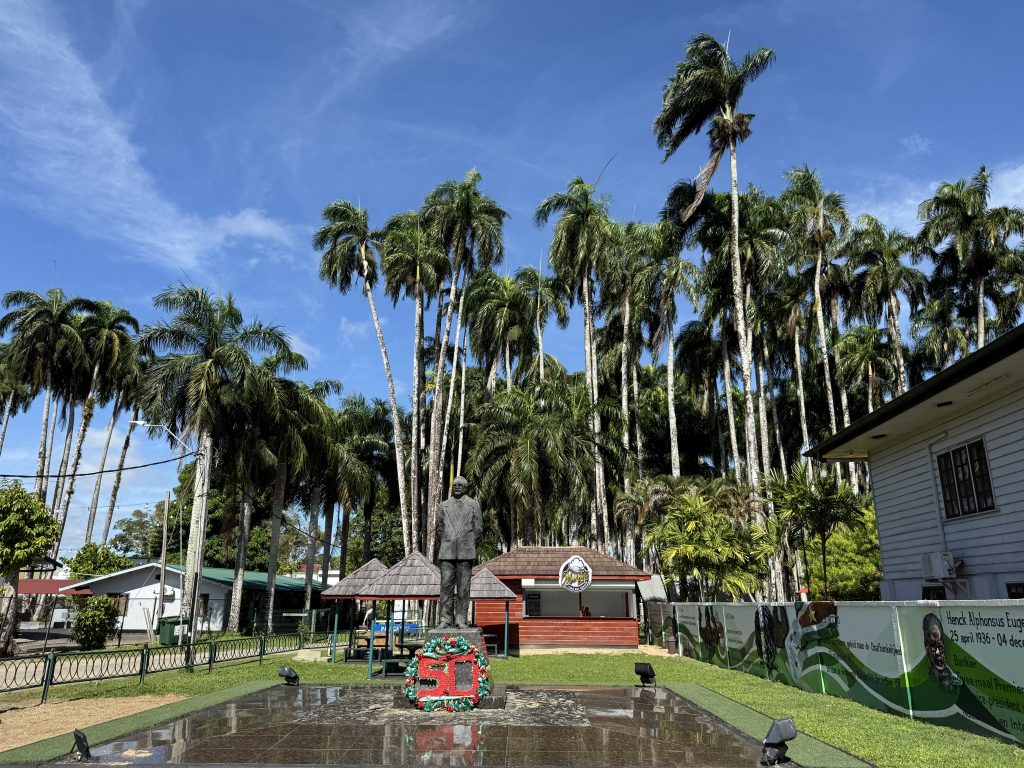
The nature in Suriname was amazing including sloths, monkeys, birds and pink-bellied dolphins. We had some great local guides to show us around and help to find the wildlife. The weather is warm and the natural environment was generally lush and green, with many palm trees. Paramaribo, the capital has many remnants of colonial architecture including an impressive wooden church. Another interesting visit was to Fort Nieuw Amsterdam along the river. We were so fortunate to have a great local guide, Robin, whose family has a lot of history including being featured in the museum!
I hope to travel to Suriname again one day and spend more time seeing the wilderness and travelling along the rivers.


Highlights
- Paramaribo, the capital with colonial architecture
- East-West road, the one main road across the country
- Fort Nieuw Amsterdam
- Pink dolphins in the Suriname river
- See the local wildlife including monkeys and sloths
- Eilerts De Haan Nature Preserve
- Central Suriname Nature Reserve
- Albina Ferry terminal to French Guiana
- South Drain ferry terminal to Guyana
- Taste the many different cuisines including Indonesian and Indian
- Braamspunt Estuary
Before you go
- E-visa is needed for UK or US tourism visits up to 90 days. Register and pay 7 days before entry
- Suriname used to be a Dutch colony and most people speak the official language, Dutch, as well as English and Indigenous languages
- 25 Nov 1975 is independence day
- Paramaribo is the capital
- There are many ethnicities living peacefully: Indo-Surinamese, Maroons, Creoles, Javanese, Indigenous peoples, Chinese, and Europeans
- Suriname was officially certified as malaria-free by the World Health Organization (WHO) on June 30, 2025


Transport
- The main airport in Paramaribo is over an hour south of the city, Johan Adolf Pengel International Airport (PBM)
- We took a ferry across the Courantyne River from Moleson Creek, Guyana to South Drain, Suriname. Normally it takes about an hour, even though it doesn’t look far. However, we were a bit quicker because we had a tugboat pulling the ferry that day. There is minimal shade so it was very hot!
- Once we were in Suriname, we travelled on a mini-bus
- We had a small boat tour on the Suriname River to see the pink dolphins and visit Fort Zeelandia
- Finally, we departed Suriname on a small boat from Albina to French Guiana
Accommodation
- In Paramaribo, we stayed at Hotel Palacio, which is centrally located in a beautiful colonial style building.
- Rooms were large and comfortable, and the A/C worked well. However, there were a lot of food smells throughout the hotel so I could smell meat while sleeping
- Breakfast was excellent and in addition to fruits, bread and cold meats and cheeses, you could also order eggs
- Other tour members went back to Suriname and there are eco-lodges in the forest that have minimal facilities
- As usual I recommend checking reviews on Google Reviews or using AirBnB


Currency
The official currency of Suriname is Suriname Dollar (SRD). As of March 2026, one British pound is equal to 51.1 SRD.
I recommend to check the currency conversion just before you leave as this fluctuates


Food
Surinamese food was delicious and had a lot of variety including Indonesian, Indian, Caribbean, and local dishes such as dried fish. One of my favourite meals was pindasoep (peanut soup) with chicken and tom tom (plantain balls).
We stopped at Concorde Restaurant & Hotel in Nieuw Nickerie after the crossing from Guyana. The Indonesian food for our quick lunch was delicious and at very reasonable prices. I had nasi goreng and a spring roll with green beans. And I got to try the bakabana, battered and fried plantains with a peanut soy sauce. Yum!
Fresh tropical fruits and coconut water were delicious and easy to find.
I will write more about specific places for food and drink in Paramaribo in the city post.
FAQs
Q: Do I need a tour guide?
A: Yes, there is not much regular, safe transport so we had a local guide and driver to take us around.
Q: Do people speak English?
A: Yes, most people speak English. The official language is Dutch, since it was a former Dutch colony. However, there are many local languages including Sranan Tongo (or Sranan), a creole language.
Q: Can I travel solo?
A: Yes, but with a tour group.
Q: How easy is it to send postcards?
A: It was relatively easy to buy postcards and stamps at the post office. Opening hours were short but they were very friendly and helpful when it was open. See Sending Postcards from Abroad for details on cost and the time it took to reach the USA.
Go to Country Map